
Kuna Directory Collections by Year
Kuna's historical shelf is regional. The University of Idaho directory guide sends a Kuna search to Boise and also to Nampa. That finding prevents a common dead end: the absence of a standalone Kuna title does not mean residents were omitted from every city directory. Boise and Ada County books carried regional pages, taxpayer lists, landowners, and nearby communities. The Idaho State Historical Society's holdings list identifies the years that expressly include Kuna.
| Collection | Years | Where Held | Access |
|---|---|---|---|
| R.L. Polk Boise and Ada regional directories | 1891 onward; Kuna marked in 1911, 1912-13, 1914, 1915, 1917, and 1918-19 | Idaho State Historical Society, Boise Public Library, University of Idaho, FamilySearch | Reading room, copy service, catalog, or microfilm |
| Boise and Ada taxpayer supplements | 1908-10 era | Idaho State Historical Society directory holdings | Regional and landowner sections |
| Boise telephone books | 1948 to present in stated holdings | Boise Public Library | Ask staff for the exact year and regional exchange |
| Hill-Donnelly Cross Reference Directory | 1969-70, 1972-91, 1993-2004 | Boise Public Library | Address-first research and focused copy service |
| Kuna Herald microfilm | November 19, 1914 to September 27, 1968 | Idaho State Historical Society | Research-copy route for names and dated notices |
The Boise Public Library local-history service reports Polk volumes from 1891 to the current period, telephone books from 1948, obituary and clipping files, and Hill-Donnelly reverse runs. Staff can supply up to five pages per week for a specific person, business, or year. The stated charge is $1.25 per page. That is a focused copy route, not a promise of bulk digital access. FamilySearch images may require an account or a FamilySearch Center.
Gaps remain meaningful. Rural households may be placed in an Ada landowner list, a regional supplement, or nowhere in a given commercial volume. Women may appear under a spouse's name. A missing year or missing line should prompt a check of Nampa, street variants, and the Kuna Herald before any conclusion is drawn.
Why Kuna Directories Say Boise
The phrase “Kuna, see Boise” is a catalog instruction, not a statement that Kuna lacked an identity. Early settlement and record keeping were tied to rail, land, postal, and county systems across Ada County. The 1882 railroad camp, the 1883 passenger train, the 1887 route change, and the Teed family's later land claim all predate Kuna's municipal archive. Those facts explain why early people evidence often appears under county or regional headings.
Search the publication's contents before the main alphabet. Regional places may be grouped at the back, while Ada landowners can have their own section. The digitized 1905 Polk Boise directory has 398 pages and about 6,255 names. Its main alphabet runs on pages 39 through 308, regional places on pages 309 through 311, and Ada landowners on pages 312 through 345. No legible Kuna resident line was confirmed in that scan, so its value here is structural.
Historical place labels must stay attached to their dates. A rural route, Boise heading, Nampa reference, township label, and modern Kuna address may all describe related geography at different times.
Insider tip: search both the surname and the address, then test Boise, Nampa, and Ada regional sections before deciding a Kuna household is absent.
Read a Kuna Directory Entry
A city directory entry is compact evidence. Record the spelling exactly, including initials and punctuation. Then note the occupation, business, street or rural route, and every relationship mark printed beside the name. The inspected 1905 scan also shows government headings with an office title and a person's name. It should not be treated as proof that a listed Boise officer lived in Kuna.
| Name | Surname, given name, and initials as printed |
|---|---|
| Relationship | Spouse or widow notation when the volume supplies it |
| Occupation | Trade, office, employer, or business named in the entry |
| Address | Street, house number, rural route, or regional place label |
| Status mark | Owner, renter, boards, or residence abbreviation only when the key defines it |
| Cross-reference | A related business, classified listing, or alternate entry |
- Criss-cross directory
- A volume arranged by address or telephone number instead of only by surname.
- Householder index
- A list centered on the named person associated with a household, not a complete list of all people there.
- Abbreviation key
- The publisher's own legend for short forms and symbols. Save it before interpreting any mark.
- Regional supplement
- Pages for places outside the title city, often the part most useful for Kuna.
Do not expand a mark from memory. Publishers changed their conventions. A spouse, occupation, or owner status belongs in the research trail only when the scanned page and its key support that reading.
Kuna Records Span Two Archives
Kuna's municipal archive starts with minutes from 1915 and ordinance or resolution runs from about 1916. Resolution R49-2017 transferred permanent agendas and minutes through 2016, plus ordinances and resolutions through 2016, to the Idaho State Historical Society. Newer entries remain on the City of Kuna historical documents pages. A name search may therefore require both custodians.
Minutes work like a selective people directory. They can name elected officials, appointees, speakers at hearings, contractors, and parties tied to an ordinance or resolution. They are not household lists, but they can place a person in a dated civic role when a commercial directory is silent.
The city archive begins later than Ada County's series. County records reach back to the 1860s, well before Kuna's municipal record set. Preserve that difference when tracing an early landowner.
For a look at the current archive interface, visit the City historical-documents source.
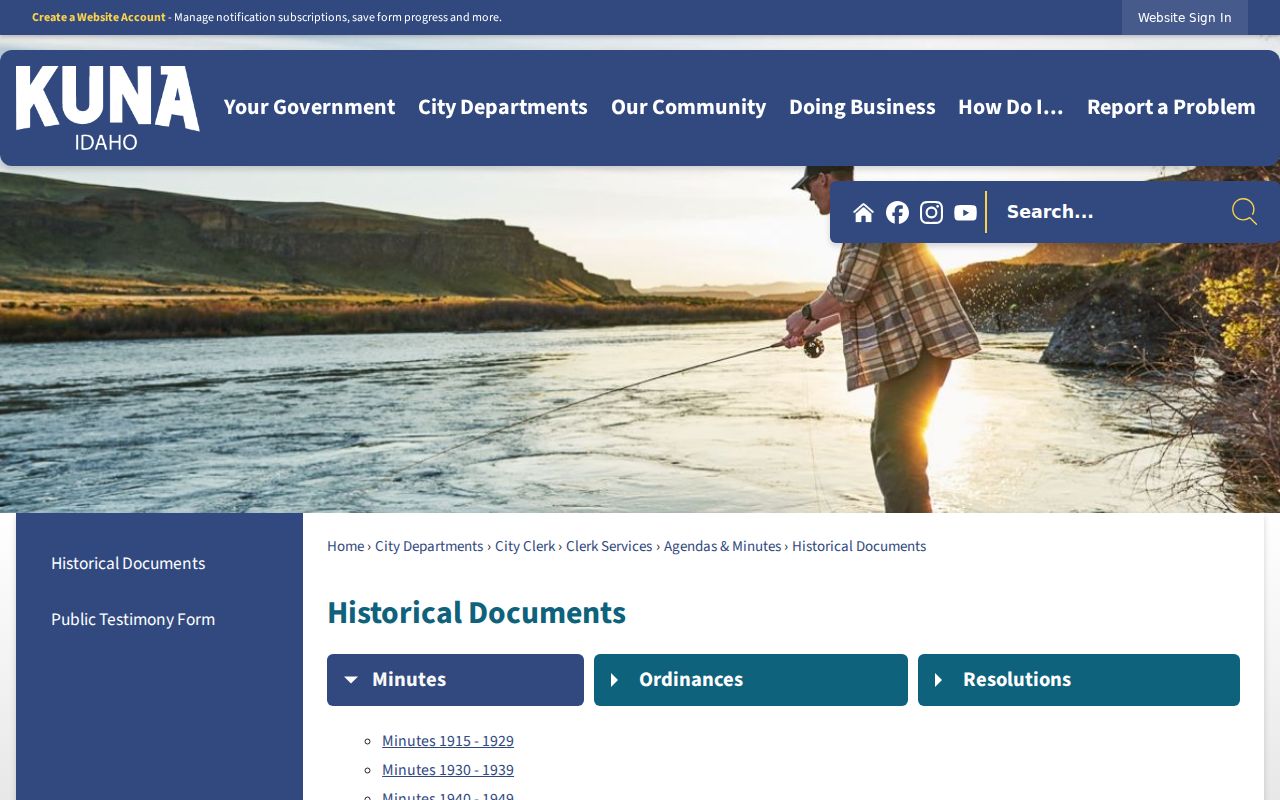
The captured page shows the city-side route that complements older permanent holdings at the state archive.
Kuna History Center Research
The Kuna Historical Society operates the Arts and History Center at 270 Orchard Avenue. Its local photographs, artifacts, exhibits, and family stories supply context that a city directory line cannot. The center is open Tuesday through Thursday from 8 a.m. to 4 p.m., with Friday visits by appointment through the City Clerk at (208) 922-5546. The city says it was established in March 2024.
As of the research date, the 2026 program includes “When the Tents Came to Kuna: Chautauqua in the 1920s.” Exhibits are not an online name index. They can still explain an occupation, business, gathering place, or surname found in a directory.
The official Kuna Arts and History Center page provides the current access route.
This source is the best local fallback when a regional volume gives a name but little Kuna context.
For broader holdings, use the Kuna Historical Society, the Idaho State Historical Society, and library staff. Ask with a full name, approximate year, address, and the type of source already checked.
Kuna Herald Bridges Directory Gaps
The Kuna Herald run on the state historical society's microfilm list spans November 19, 1914 through September 27, 1968. Search it for obituaries, legal notices, civic activity, announcements, and changes in a local business. A dated notice can connect two city directory years or explain why a surname disappears.
Later newspaper research can move to Boise Public Library's Idaho Statesman and NewsBank resources. Earlier searches can use the Idaho Biographical Index and the reconstructed 1890 Idaho census, which draws from vital, court, tax, land, newspaper, and Boise-directory evidence from roughly 1885 through 1894. The reconstruction is a compiled index, not a normal federal census.
City directories and papers have different strengths. A directory gives a compact annual or near-annual listing. A newspaper gives events and relationships, but only when a person became news. Use each to test the other.
Note: The Herald dates define the verified microfilm run, not proof that every weekly issue or every Kuna resident appears.
Trace Families in Kuna Directories
Build the trail from dated facts, not a modern place label. A Kuna city directory can place a name near a certain address and occupation, while a federal census gives a ten-year household snapshot. The Kuna Herald may explain a move, death, marriage, or business change between them. The 1950 census became public in 2022 under the federal 72-year rule; 1960 images are not yet public under that rule.
- Fix the likely era with a parcel, obituary, Sanborn sheet, census result, or city archive item.
- Search the surname in Boise and Ada volumes, then inspect regional pages and alternate initials.
- Check the same address in Hill-Donnelly reverse volumes and note every change in name or street form.
- Pair directory years with the 1910 through 1950 public censuses, keeping the township or enumeration place.
- Use the Kuna Herald, probate material, or an obituary index to explain the trail's endpoint.
A disappearance has several possible causes: a move, death, missed publication, rural exclusion, changed surname, or a new regional heading. Search forward one more volume and backward one more volume. Then test the street spelling and newspaper date range. For current address-keyed records, shift to the Kuna street directory rather than stretching historical evidence into a present claim.
Kuna Addresses Beyond Directories
The Library of Congress holds a free December 1914 Kuna Sanborn sheet. It shows building footprints, materials, uses, lot lines, street widths, stories, and water facilities. It does not name every resident. Pair its physical evidence with a city directory, deed, census line, or city archive entry.
FamilySearch catalogs Ada County marriages, births and deaths, naturalizations, assessments, delinquent taxes, and judgments. Coverage varies, and some images require a sign-in or access at a FamilySearch Center. The Idaho State Archives also holds an Ada County collection spanning 1865 through 1973 across deeds, vital events, wills, judgments, guardianships, naturalizations, and tax records.
The official Kuna Library is a practical place to ask about catalog access and databases.
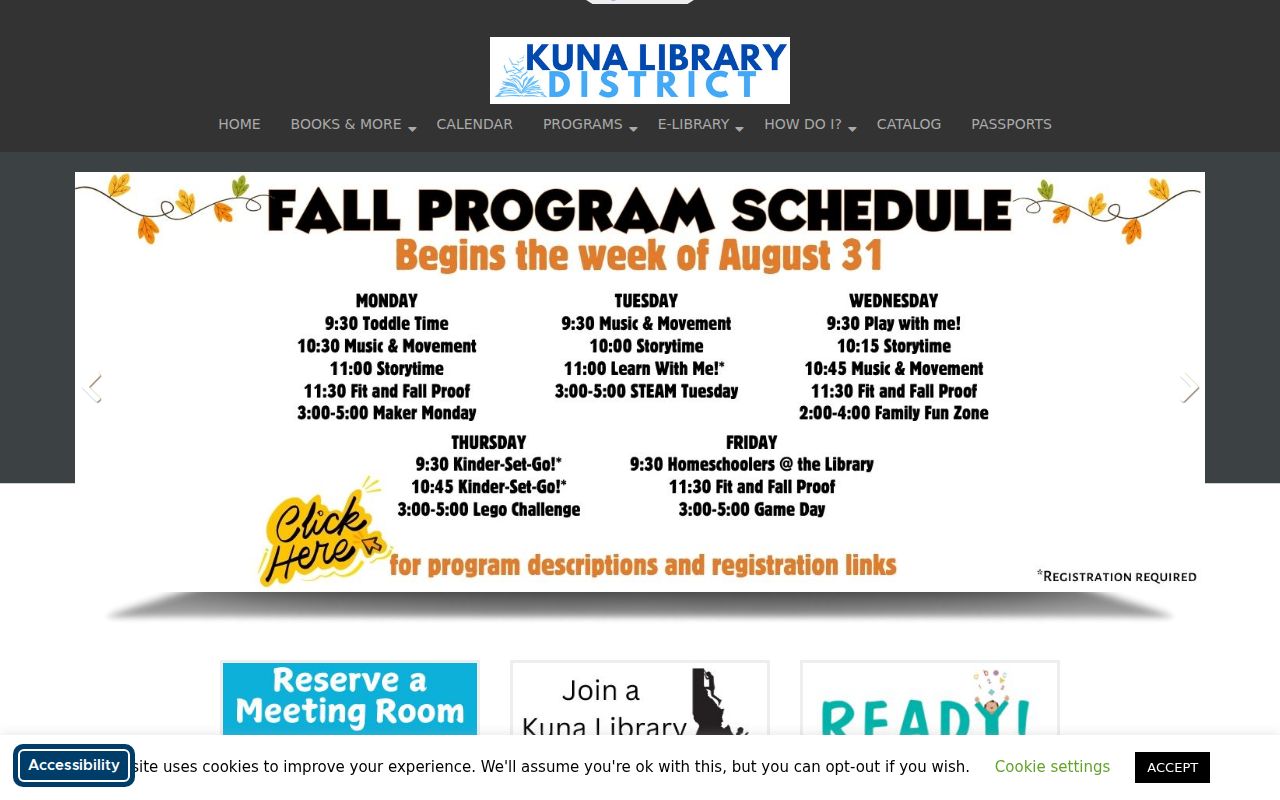
The library capture represents a staffed access channel, especially useful when a home user meets a catalog or database limit.
The official Kuna history supplies the railroad, postal, and settlement context needed to interpret early regional labels.
The history source helps explain why an early person may surface in a land, rail, or county record before appearing in a municipal file.
The Kuna department directory identifies the municipal contact route for city-held records.
That directory is a present-day office list, not a household book, but it directs requests to the correct custodian.
Finally, the Kuna community profile supplies named places useful for searching minutes, photos, and local notices.
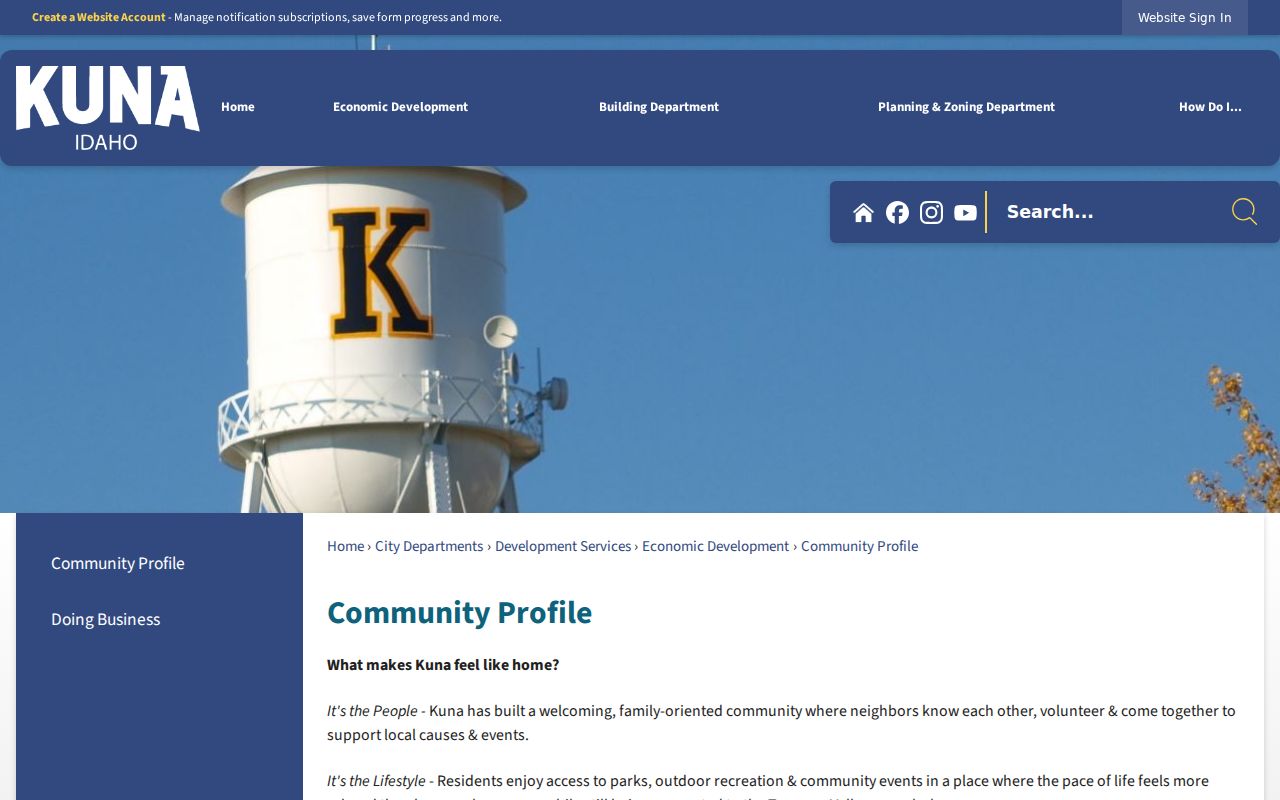
Place names from this source can narrow a broad archive search without turning community references into claims about residents.